 StockDrifts
Why Pabrai is avoiding the index and hunting for no-brainers
According to Mohnish Pabrai, speaking with New Money (Brandon van der Kolk), the single biggest message for investors as of August 2026 is to avoid murky bets and wait for no-brainers. He says his style is to make a few large, infrequent bets only when the odds are overwhelmingly in his favor.
Pabrai tells Brandon that, in his view, the S&P 500 at all‑time highs, concentrated in the "Mag 7" with a high Shiller PE, is "probably not the best direction" for a new investor. He describes the index as "more likely" ridiculously overvalued rather than a clear opportunity.
Instead of dollar‑cost averaging into the S&P 500, which he says he would normally recommend to long‑horizon investors, he now points them toward Berkshire Hathaway Class B (BRKB) as a kind of index substitute. He frames Berkshire as a safer base that offers downside protection in normal times and significant upside if markets suffer a major dislocation.
The core thesis: Berkshire as an "ETF" and Kaspi as a heads-I-win bet
Pabrai’s central thesis in this conversation has two pillars: treat Berkshire Hathaway as an index, and seek obscure, highly mispriced businesses like Kaspi.
On Berkshire, he characterizes BRKB as a quasi‑ETF where around "40%" of the market cap is cash and "another 25–30%" is in very good publicly traded businesses, with the rest in wholly owned operating companies. He believes Berkshire is likely fairly priced or underpriced but "probably not overpriced," and argues that if a big market dislocation arrives, Greg Abel will "step up to the bat" and deploy the cash aggressively.
For individual stock picking, he holds up Kaspi, a Nasdaq‑listed company based in Kazakhstan, as his archetype of a no‑brainer. He describes Kaspi as "the WeChat of Kazakhstan" with around "$2 billion" in annual cash flow, a dominant super‑app franchise in a country of roughly "10 million" people, and a founder‑CEO who owns roughly "40–43%" of the company. At what he calls five to seven times cash flow and a dividend yield approaching "10%", he sees a base case of 2–3x returns from the core business, plus a "moonshot" expansion into Turkey.
Evidence Pabrai cites: Berkshire’s cash, Google, Kaspi’s cash flows and Turkey moonshot
To back his views, Pabrai leans heavily on balance-sheet strength, cash flow math, and management track records rather than macro forecasts.
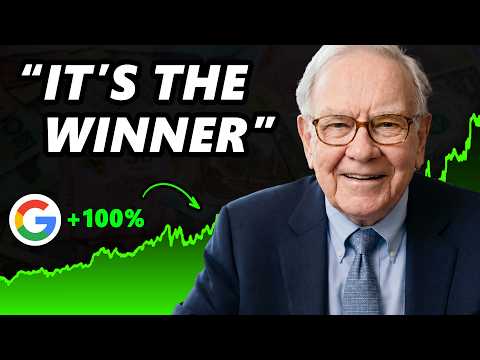
He notes that Berkshire is sitting on what Brandon describes as roughly a "$400 billion" cash pile, generating "50, 60 billion or more" in annual cash flow. Pabrai points out that Berkshire recently put about "$30 billion" to work in Google, a company he says has grown into roughly a "$4 trillion" market cap. In his telling, Warren Buffett made the Google decision himself after decades of firsthand exposure via GEICO’s advertising spend and early interactions with Google’s founders.
On Kaspi, Pabrai highlights:
- Around "$2 billion" in annual cash flow from a super‑app that handles everything from IDs to shopping in Kazakhstan.
- A rockstar CEO who turned a "broken, failing bank" into a dominant platform and owns about "40–43%" of the equity.
- A period when the company halted its roughly "$1 billion" annual dividend to acquire a Turkish bank and fintech, prompting the stock to be "taken out back and shot."
- A resulting dividend yield "approaching 10%" at what he says is five to seven times cash flow, after which WeChat’s owner bought a stake and the CEO increased his own holding.
He frames Turkey (with roughly eight times Kazakhstan’s population) as a high‑upside optionality: if it fails, he still expects 2–3x from the core; if it works, he describes the outcome as unknowably large.
AI, pickaxe makers, and why so much ends up in the "too hard" pile
According to Pabrai, most of what dominates financial media in 2026—AI, the Magnificent Seven, SpaceX, and memory-chip makers—is exactly where he doesn’t want to invest.
He calls the current AI build‑out "the gold rush," where hyperscalers are being forced to spend massive sums on data centers, memory, and infrastructure. He notes that when a company like Google spends "$100 billion" in 2027, it’s the rough equivalent of "$20 billion" five or six years earlier because input prices have exploded. In his analogy, the "memory guys" and other suppliers are the pickaxe sellers in this rush.
Yet even there, he’s cautious. He recounts a Micron CFO saying that even with all the patents, engineers and processes, replicating an existing fab with the same throughput might be impossible because "there’s a part of this business that’s black magic." Pabrai sees three entrenched memory players enjoying short‑term power, but he still refuses to invest because he cannot confidently see where the industry will be in three to five years. He extends this skepticism to AI platform leaders and even to pickaxe makers, classifying the whole complex as "too hard" and insisting he prefers places "nobody’s interested" and that feel like being hit "over the head by a 2 by 4."
Risk, uncertainty, SpaceX and the discipline of saying "no"
Throughout the interview, Pabrai stresses that his risk control comes from what he refuses to touch, not from clever hedging. Anything he cannot explain to a 10‑year‑old in four sentences goes straight into the "too hard" pile.
When Brandon asks about Adobe, whose share price had fallen sharply from 2024 highs amid AI image‑generation fears, Pabrai says the entire decision reduces to one question: can you estimate Adobe’s minimum cash flows over the next 5–15 years with high conviction? If yes and the discounting looks attractive, it’s investable; if not, "we move on." For him personally, Adobe is "too hard," while Kaspi’s cash flows feel far more predictable.
The same logic applies to SpaceX. Pabrai calls Elon Musk "not human" and "superhuman," praises SpaceX’s business and execution, and warns never to short Musk. But he still puts SpaceX in his too‑hard bucket, preferring simpler bets like Kaspi where, if he loses money, he understands exactly how it happened. He gives a similar answer on private credit and bank exposure: he has "no intelligent thoughts" and has never spent time on it, so it belongs in the too‑hard pile.
He also flags governance risk: he does not want to be "slightly in bed with a crook" or with "greedy managers." He insists that integrity, honesty, and capability of management are non‑negotiable, and says he judges those mostly from long, observable track records rather than forward promises.
What to watch next: dislocations, management moats and your own "deepest desire"
Looking forward, Pabrai suggests several signals investors might monitor rather than obsessing over day‑to‑day price moves.
First, he repeatedly mentions the possibility of a "big dislocation" in the next five to ten years after a long S&P 500 run. In that scenario, he thinks Berkshire’s huge cash pile could be "wiped out" deploying into bargains, potentially leading to a "double in a few years" for shareholders. He implies that Berkshire’s opportunistic behavior in a downturn will be a key test for Greg Abel’s capital‑allocation temperament post‑Buffett.
Second, he urges investors to focus on businesses where a moat has clearly emerged over decades—naming examples like Visa, Mastercard, Moody’s, American Express, Ferrari, Costco, Coca‑Cola and FICO scores as the rare cases where capitalism’s brutality has not eroded returns. In his view, such assets should only be sold when they are "egregiously" overpriced, citing something like 250x normalized earnings as the kind of extreme that might justify selling.
Finally, he turns inward, arguing that the most important "mental model" is focus. Drawing on an ancient Indian text he paraphrases, he says your deepest desire is your destiny, and you cannot have three deepest desires. For investing, that means deciding very clearly what you are hunting for—whether it’s P/E of 1 stocks, or simple, high‑cash‑flow compounders—and then relentlessly turning over stones (for example, combing through Value Investors Club write‑ups) until an idea hits you like a 2×4. He believes that with enough focus, such no‑brainers will inevitably appear.
Frequently asked questions
What did New Money (Brandon van der Kolk)’s guest Mohnish Pabrai say about the S&P 500?+
Mohnish Pabrai told New Money (Brandon van der Kolk) that, as of August 2026, he is not an investor in the S&P 500 and generally feels it is overheated. He said that while he would normally recommend dollar‑cost averaging into an index for long‑term investors, he now believes the S&P 500 is "more likely" ridiculously overvalued and not a no‑brainer.
Why does Mohnish Pabrai prefer Berkshire Hathaway (BRKB) over the S&P 500?+
According to Pabrai on New Money (Brandon van der Kolk), Berkshire Hathaway Class B shares can be treated like an index with better downside protection. He notes that a large portion of Berkshire’s value is cash and high‑quality public and wholly owned businesses, and he expects Greg Abel to deploy that cash aggressively if a major market dislocation occurs.
What did Mohnish Pabrai say about Google and AI investments?+
Pabrai explained that Warren Buffett himself decided to invest about $30 billion into Google, a company he described as around a $4 trillion market cap with long‑standing ties to Berkshire via GEICO. However, Pabrai views AI more broadly as a "gold rush" where only two or three players may win and many will be "carcasses on the roadside," so he prefers to put most AI‑related opportunities in his too‑hard pile.
How does Mohnish Pabrai view Kaspi, the Kazakhstan super‑app company?+
On New Money (Brandon van der Kolk), Pabrai described Kaspi as the "WeChat of Kazakhstan," generating about $2 billion in annual cash flow and trading at roughly five to seven times that cash flow with a dividend yield nearing 10%. He sees the core Kazakhstan business as strong and views Kaspi’s expansion into Turkey as a moonshot that could add significant upside, calling it a "heads I win, tails I win" type of investment.
What is Mohnish Pabrai’s opinion on investing in SpaceX?+
Pabrai told New Money (Brandon van der Kolk) that he considers Elon Musk "superhuman" and SpaceX a phenomenal business, and he would never short Musk. Nonetheless, he personally puts SpaceX in his too‑hard pile, preferring simpler, more predictable cash‑flow situations like Kaspi where he feels he can fully understand how he might win or lose.
How does Mohnish Pabrai decide whether a stock goes into his "too hard" pile?+
Pabrai said that if he cannot explain an investment to a 10‑year‑old in about four sentences, or if he lacks high conviction in the minimum cash flows over the next 5–15 years, the stock goes into his too‑hard pile. He emphasized to New Money (Brandon van der Kolk) that most popular themes, including many AI plays and complex credit issues, fall into this category for him.